
The Psychology of Festive Eating: Why Restriction Backfires
Updated: May 29
you have probably noticed the pattern — before a holiday event, you promise yourself you'll "be good." you skip lunch to "save calories" for the evening. then at the party, something shifts. the carefully constructed restraint crumbles, and you eat far more than you would have otherwise. driving home, you feel uncomfortably full and frustrated with yourself. this isn't a character flaw – it's predictable psychology.
the counterintuitive science of restraint
dietary disinhibition is the paradoxical tendency to overeat following periods of restriction. studies consistently demonstrate that people who employ rigid dietary rules experience more frequent and severe episodes of overeating compared to those using flexible approaches (Stewart et al., 2002).
the mechanism involves both physiological and psychological factors. when you restrict food intake, your body increases production of ghrelin, the hunger hormone, whilst reducing leptin, which signals satiety. simultaneously, cognitive restraint creates what researchers call the "what-the-hell effect" – once you've broken your self-imposed rule, the mental reasoning becomes "I've already ruined it, might as well continue" (Savage et al., 2009).
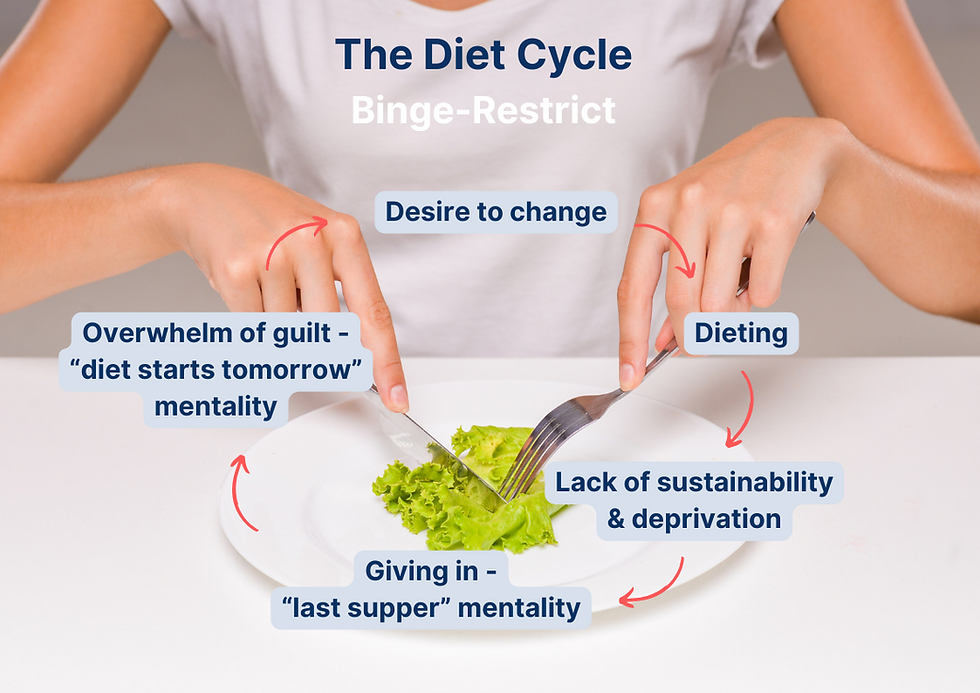
the last supper mentality
December amplifies this dynamic. knowing rich foods will be available at upcoming events, many people enter what psychologists term "last supper eating" – consuming large amounts of restricted foods before attempting to resume control. this pattern creates a cycle: restriction generates deprivation, which triggers compensatory overeating, which generates guilt, which motivates more restriction (Stewart et al., 2002).
large-scale studies examining eating patterns during holidays find that rigid dietary restraint predicts greater weight gain compared to flexible restraint or intuitive eating approaches. the difference isn't what people eat at events – it's the restriction patterns before and between them (Savage et al., 2009).
the nuance between permission versus eating it all
here's where the conversation usually goes wrong: rejecting restriction doesn't mean abandoning all structure or eating everything indiscriminately.
rigid restraint — strict rules, forbidden foods, all-or-nothing thinking
flexible restraint — guidelines, preferences, context-dependent choices
research finds that flexible restraint correlates with stable weight maintenance and lower psychological distress, while rigid restraint predicts weight cycling and disordered eating patterns. the difference lies in psychological relationship with food, not the foods themselves (Stewart et al., 2002).
in simple terms, instead of "I can't eat dessert at the party," flexible thinking becomes "I'll have dessert if I genuinely want it, and I'll enjoy it without guilt." this subtle shift eliminates the deprivation-rebellion cycle that drives overconsumption.
the korean celebration philosophy
traditional korean eating culture offers a relevant model. celebrations feature rich foods without the restriction mentality that characterises western diet culture. the concept of "jeong" (정) – deep connection through shared meals – prioritises social and emotional nourishment alongside physical sustenance.
korean festive meals naturally incorporate balance through their structure: a variety of banchan (side dishes including fermented vegetables), quality protein, and rice provide satisfaction without requiring conscious restriction. when celebratory foods are integrated into meals rather than segregated as "treats," they lose their psychological power to trigger overconsumption.

practical strategies that aren't restriction
rather than arriving at festive events hungry (which guarantees overconsumption), eat regular, balanced meals throughout December. choose Grounded Kitchen's balanced bowls on busy days – the combination of protein, vegetables, rice, and fermented kimchi provides genuine satisfaction that prevents reactive eating at events.
when you're adequately nourished, foods at parties become conscious choices rather than compulsions. you can select what you genuinely enjoy without the urgency that accompanies deprivation. this isn't willpower – it's biology working with you rather than against you.
stick to the 80/20 guideline, where 80% of what you eat is nutritious, while the remaining 20% is left for enjoyment. remember that your body handles occasional rich foods remarkably well when overall patterns remain consistent. it's the restriction-binge cycle, not the celebration meals themselves, that creates problems. permission, backed by adequate baseline nourishment, proves far more effective than restraint for navigating festive eating.

Written by: Gabi Zaromskyte, MSc, ANutr
Registered Nutritionist | Intuitive Eating Counsellor | Holistic Health Coach—
I found the point about restriction making festive eating more difficult really interesting. The idea of enjoying seasonal foods without turning them into something forbidden feels much more practical. After reading this, I’d relax with a quick round of Golf Hit.